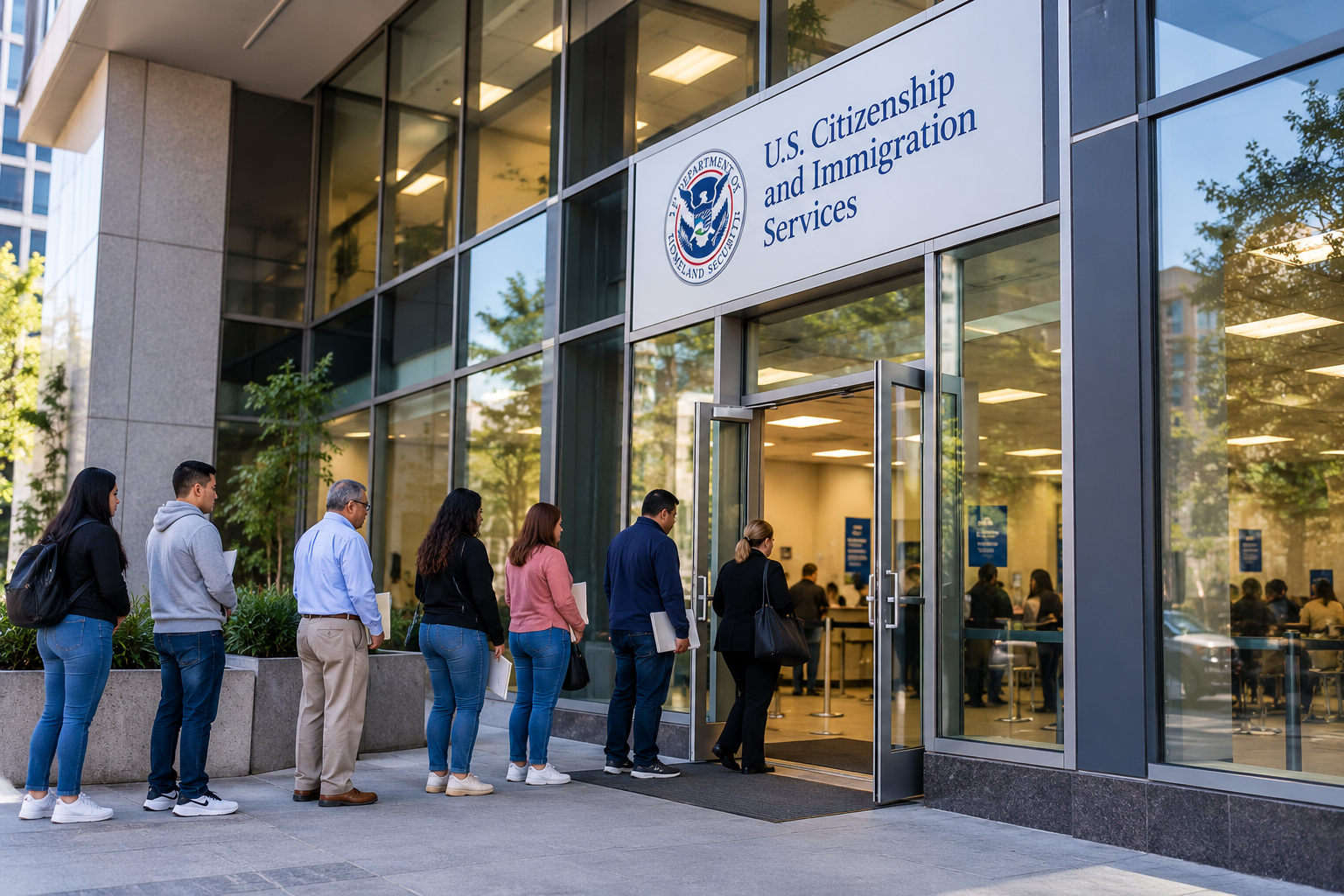
Adjustment of Status vs. Consular Processing: Which Green Card Process Is Right for You? (2026 Guide)
Adjustment of Status (AOS) vs. Consular Processing: Both pathways can lead to a U.S. Green Card, but they differ in eligibility requirements, application procedures, processing times, and potential immigration risks. Learn how each process works, what happens after I-130 approval, and which option may be appropriate for your immigration circumstances.
Recent reviews from our clients on Google
Read all 884 reviews on Google“I am very satisfied with the staff who answer each of my calls and give me the confidence to move forward with my case. I know I’ve only just started and the wait is long, but I have the full support of attorney Elizabeth Rosario and her team, and that gives me a lot of confidence! Thank you, attorney Elizabeth.”
Ana
September 2026
“First, thanks to God and to lawyer Elizabeth. Today everything went very well with the biometrics. I am very grateful. When another place told me no, she said here we can, and here are the results. Greetings, and may she continue fighting for our people.”
Israel G.
September 2026
“First of all, I would like to thank Attorney Elizabeth’s entire team for their daily work and kindness. My husband and I are extremely happy with the service and how they handle their work. I highly recommend them to anyone. Don’t hesitate to contact Attorney Elizabeth if you are looking for an immigration lawyer. I recommend her 100%. Best regards and blessings.”
Sarahi S.
September 2026
Reviews are written by clients and published on Google. Each describes that person’s own experience; past results do not guarantee a similar outcome in your case.

Adjustment of Status vs. Consular Processing: Which Green Card Process Is Right for You? (2026 Guide)
If you are applying for a U.S. Green Card, understanding the difference between Adjustment of Status (AOS) and Consular Processing is an important step in determining how to pursue lawful permanent residence.
Both processes can lead to a Green Card, but they differ in where the application is completed, which government agencies handle the case, processing times, and potential immigration risks.
Adjustment of Status (AOS) generally allows eligible applicants to apply for a Green Card from within the United States by filing Form I-485 with U.S. Citizenship and Immigration Services (USCIS). Consular Processing allows applicants to pursue an immigrant visa through the U.S. Department of State and attend an interview at a U.S. embassy or consulate abroad.
The appropriate process depends on your immigration status, eligibility, immigration history, visa availability, and individual circumstances. A Licensed Immigration Attorney can evaluate these factors before recommending an immigration strategy. This information is provided for educational purposes only and should not be considered legal advice.
What Is the Difference Between Adjustment of Status and Consular Processing?
The primary difference between Adjustment of Status vs. Consular Processing is where the applicant completes the final stage of the Green Card process.
Adjustment of Status (AOS)
Adjustment of Status is the process through which an eligible person physically present in the United States applies for lawful permanent residence without leaving the country to obtain an immigrant visa.
Eligibility depends on:
Application form: Form I-485, Application to Register Permanent Residence or Adjust Status.
Processing agency: USCIS Adjustment of Status requirements.
Location: The application is generally processed within the United States.
Work authorization: Eligible applicants may apply for employment authorization while their I-485 is pending.
Travel: Applicants must carefully consider travel restrictions and whether advance parole or another applicable exception permits departure and return while the application is pending.
Eligibility requirements vary by immigration category. Being physically present in the United States does not automatically make someone eligible to adjust status. Please be advised by a Licensed Immigration Attorney for your particular case.
Consular Processing
Consular Processing is the procedure through which an eligible applicant pursues an immigrant visa through the U.S. Department of State and completes the required interview at a designated U.S. embassy or consulate abroad.
Eligibility depends on:
Application form: Form DS-260
Processing agencies: USCIS, the National Visa Center (NVC), and the appropriate U.S. embassy or consulate have different responsibilities throughout the process.
Location: The immigrant visa interview takes place abroad.
Required documentation: Applicants must submit the required civil documents, and other supporting materials. Review the official USCIS guide to Consular Processing for additional information.
Entry into the United States: If the immigrant visa is approved and issued, the applicant must travel to the United States and be admitted to become a lawful permanent resident.
Consular Processing is commonly used by applicants living outside the United States and may also be an option for certain individuals who are physically present in the country. Please be advised by a Licensed Immigration Attorney for your particular case.
How Does Consular Processing Work After I-130 Approval?
After USCIS approves Form I-130, Petition for Alien Relative, an eligible applicant pursuing Consular Processing generally moves to the National Visa Center stage.
The process typically involves:
Petition approval: USCIS approves the qualifying immigrant petition.
National Visa Center processing: The NVC creates the visa case and provides instructions when the case is ready for further processing.
Fees and documentation: The applicant pays the required fees and submits Form DS-260, the Affidavit of Support when applicable, and the required civil documents.
Document review: The NVC reviews the submitted materials and determines whether the case is documentarily complete.
Visa interview: The NVC coordinates the interview with the appropriate U.S. embassy or consulate when an appointment can be scheduled and a visa is available.
Visa decision: A consular officer reviews the application and determines whether the immigrant visa can be issued.
An approved I-130 does not automatically grant a Green Card or guarantee immediate visa availability. Applicants in preference categories may need to wait until their priority date becomes current under the monthly Visa Bulletin. You can review the Department of State's National Visa Center processing instructions for additional details.
How Long Does Consular Processing Take?
The Consular Processing timeline varies depending on the immigrant category, visa availability, document review, and interview appointment availability.
Factors that may affect the timeline include:
USCIS petition processing: The time required to approve Form I-130 or another qualifying immigrant petition.
Priority date and Visa Bulletin: Some family-sponsored and employment-based categories have annual visa limits.
NVC processing time: The time required to create the case and review submitted documents.
Embassy or consulate availability: Interview wait times vary by location and visa category.
Additional requirements: Missing documents, administrative processing, or other eligibility concerns may delay a decision.
There is no single consular processing timeline that applies to every applicant.
To evaluate your case, review the current NVC processing timeframes and the Department of State's Immigrant Visa Scheduling Status Tool. Please be advised by a Licensed Immigration Attorney for your particular case.
Is Adjustment of Status Faster Than Consular Processing?
Neither process is automatically faster.
The time required for Adjustment of Status depends on USCIS processing, the applicant's immigration category, visa availability, and whether additional evidence or an interview is required.
Consular Processing involves additional steps through the NVC and a U.S. embassy or consulate. However, the actual timeline depends on the circumstances of the case and the availability of immigrant visas and interview appointments.
When comparing Adjustment of Status vs. Consular Processing, applicants should consider the complete process rather than comparing only the processing time of Form I-485 with the consular interview wait. Please be advised by a Licensed Immigration Attorney for your particular case.
How Risky Is Consular Processing?
Consular Processing involves immigration considerations that may have significant consequences depending on the applicant's history and eligibility.
Potential concerns include:
Inadmissibility: Certain criminal, immigration, medical, or misrepresentation-related grounds may affect eligibility for an immigrant visa.
Unlawful presence: Certain departures from the United States may trigger three-year or ten-year unlawful presence bars, depending on the circumstances.
Visa refusal: A consular officer may refuse an immigrant visa if the applicant does not establish eligibility or a legal ground of inadmissibility applies.
Administrative processing: Additional review may delay a final decision.
Travel and family separation: Applicants may need to remain abroad while awaiting an interview or resolution of their case.
The level of risk depends on the specific facts. Some applicants may qualify for a waiver, while others may face legal barriers that require careful evaluation before proceeding.
Applicants with previous immigration violations, unlawful presence, prior visa refusals, or potential inadmissibility issues should consult a Licensed Immigration Attorney before making decisions about travel or Consular Processing.
What Is the Difference Between Change of Status and Consular Processing?
Change of Status and Consular Processing serve different immigration purposes.
Change of Status generally refers to changing from one eligible nonimmigrant classification to another while in the United States, when permitted by law.
Adjustment of Status is the process of applying for lawful permanent residence from within the United States.
Consular Processing involves applying for an immigrant visa through a U.S. embassy or consulate abroad.
These processes are not interchangeable. A change of status does not itself grant a Green Card, and Consular Processing is not simply another name for changing nonimmigrant status.
The appropriate procedure depends on whether the applicant seeks a temporary immigration classification or lawful permanent residence.

Frequently Asked Questions About Adjustment of Status vs. Consular Processing
Why Would Someone Choose Adjustment of Status Instead of Consular Processing?
An eligible applicant may prefer Adjustment of Status because the application can generally be completed within the United States. Depending on eligibility, the applicant may also seek employment authorization while the application is pending.
However, eligibility requirements, travel considerations, and individual immigration circumstances should be evaluated before choosing this route.
Is Consular Processing Required After I-130 Approval?
Not always. After Form I-130 approval, an eligible applicant may pursue Adjustment of Status if the applicable requirements are satisfied, or Consular Processing if an immigrant visa abroad is the appropriate route.
An approved I-130 alone does not establish eligibility for either process.
Can You Check Your Consular Processing Case Status Online?
Yes. Applicants can use the Department of State's Consular Electronic Application Center (CEAC) to review available case information and messages after receiving the required case credentials.
What Happens If a Consular Processing Application Is Refused?
The next steps depend on the legal basis for the refusal. Some cases require additional documents or administrative processing, while others may involve inadmissibility concerns or a possible waiver.
Applicants should review the refusal notice and seek legal advice before deciding whether to submit additional evidence, pursue a waiver, or explore another immigration option.
Can You Change From Adjustment of Status to Consular Processing?
In some circumstances, an applicant may be able to pursue Consular Processing instead of Adjustment of Status. However, changing the intended processing route is not always straightforward.
The appropriate steps depend on whether Form I-485 has already been filed, the status of the underlying immigrant petition, visa availability, and any immigration concerns that may affect eligibility.
Before withdrawing a pending application or departing the United States, applicants should obtain legal advice. Depending on the circumstances, withdrawal or departure may affect their immigration status, pending applications, or eligibility to return. Please be advised by a Licensed Immigration Attorney for your particular case.
Is Adjustment of Status or Consular Processing Better?
Neither process is universally better. The appropriate option depends on eligibility, immigration history, location, and individual priorities.
Adjustment of Status may be appropriate for an eligible applicant who is already in the United States and wants to pursue permanent residence without completing the immigrant visa process abroad.
Consular Processing may be appropriate for an applicant living abroad or for someone whose circumstances require or favor the immigrant visa process.
Before choosing a process, consider:
Eligibility: Whether you qualify for Adjustment of Status under your immigration category.
Immigration history: Whether previous status violations, unlawful presence, or other concerns affect either route.
Timing: Whether a visa is available and what the current processing conditions are.
Travel and family circumstances: Whether completing the process abroad could affect your family, employment, or ability to travel.
Potential legal barriers: Whether inadmissibility grounds or other issues require additional review.
A Licensed Immigration Attorney can assess these factors and explain which options may be available based on your circumstances.
Speak With a Licensed Immigration Attorney
Choosing between Adjustment of Status and Consular Processing requires more than comparing processing times. Eligibility, immigration history, visa availability, and potential legal barriers can all affect the available options.
At Elizabeth Rosario Law, we help families nationwide to review your potential case, evaluate possible applications, and identify potential risks involving immigration status or removal proceedings.
📞 [Schedule Your FREE Evaluation Today]
Call Our National Consult Line: (855) 627-2292
We proudly serve clients across all 50 states from our primary offices in Wyoming, Michigan, and Charlotte, North Carolina.
Disclaimer: This content is for general informational purposes only and does not constitute legal advice. Immigration laws change frequently and the information here may not reflect the most current legal developments. Consult an attorney for advice on your specific situation.

Elizabeth Rosario
Founding Attorney
Reviewed October 23, 2026