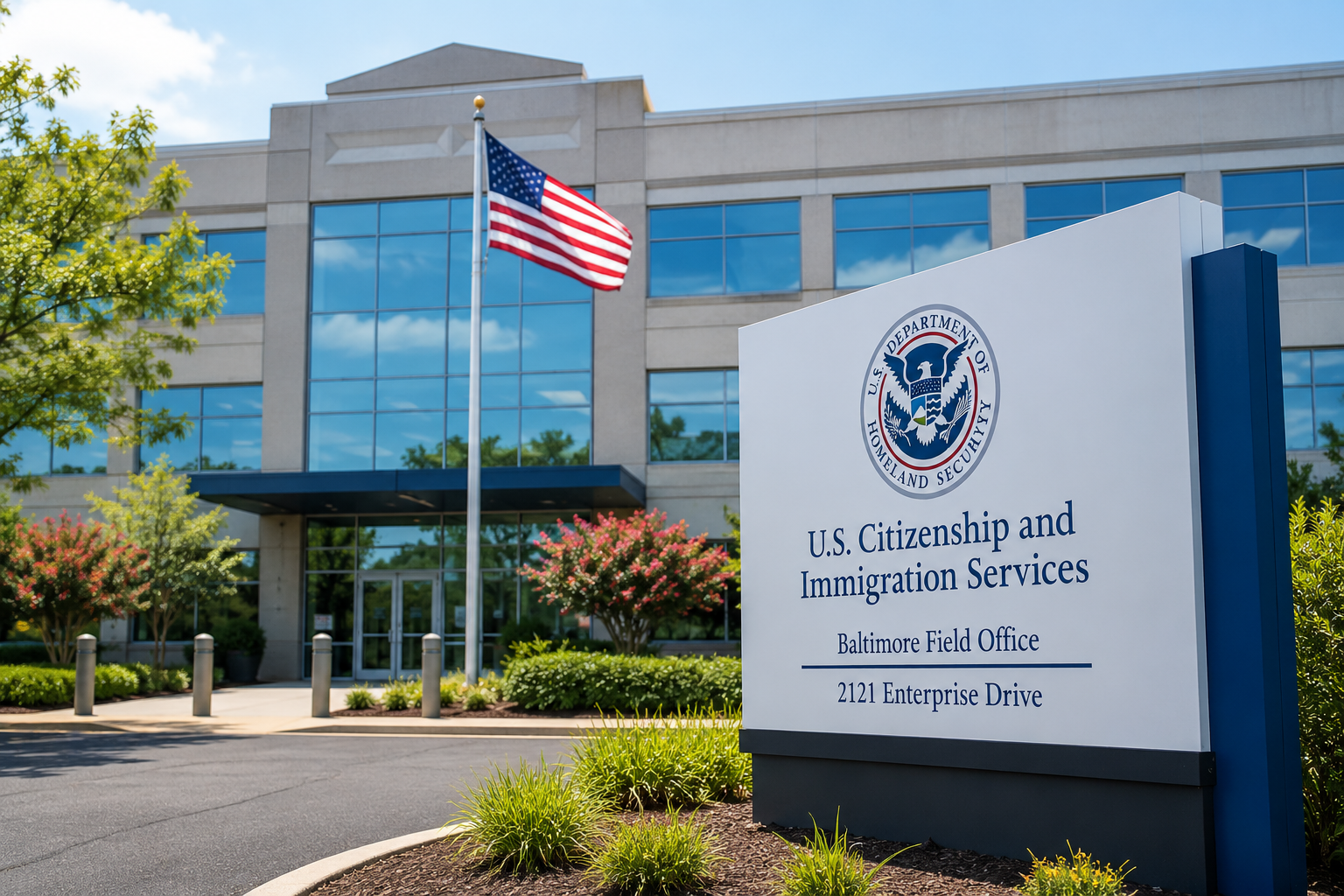
T Visa to Green Card: Adjustment of Status Guide 2026
Learn how a T Visa holder may apply for a Green Card through adjustment of status, including physical-presence requirements, Form I-485, supporting evidence, family-member eligibility, and what to expect after filing with USCIS.
Recent reviews from our clients on Google
Read all 884 reviews on Google“I am very satisfied with the staff who answer each of my calls and give me the confidence to move forward with my case. I know I’ve only just started and the wait is long, but I have the full support of attorney Elizabeth Rosario and her team, and that gives me a lot of confidence! Thank you, attorney Elizabeth.”
Ana
September 2026
“First, thanks to God and to lawyer Elizabeth. Today everything went very well with the biometrics. I am very grateful. When another place told me no, she said here we can, and here are the results. Greetings, and may she continue fighting for our people.”
Israel G.
September 2026
“First of all, I would like to thank Attorney Elizabeth’s entire team for their daily work and kindness. My husband and I are extremely happy with the service and how they handle their work. I highly recommend them to anyone. Don’t hesitate to contact Attorney Elizabeth if you are looking for an immigration lawyer. I recommend her 100%. Best regards and blessings.”
Sarahi S.
September 2026
Reviews are written by clients and published on Google. Each describes that person’s own experience; past results do not guarantee a similar outcome in your case.

T Visa to Green Card: Adjustment of Status Guide 2026
Some T Visa holders may eventually become lawful permanent residents. However, receiving T nonimmigrant status does not automatically result in a green card. Applicants must complete a separate application and meet all T Visa adjustment of status requirements of USCIS.
This guide explains when a T Visa holder may apply, the physical-presence rules, required evidence, Form I-485, and the steps involved in pursuing permanent residence.
Can a T Visa Holder Apply for a Green Card?
Yes. A qualifying T Visa holder may apply for a Green Card through adjustment of status after meeting the required period of physical presence and all other applicable conditions.
Before beginning the T Visa-to-Green-Card process, review our T Visa Requirements Guide. For a broader explanation of permanent residence applications, read our Adjustment of Status Guide.
Frequently Asked Questions About a T Visa to Green Card
How Long After Receiving a T Visa Can I Apply for a Green Card?
A principal T Visa holder generally needs three years of continuous physical presence after lawful admission in T status. An earlier filing may be possible if the trafficking investigation or prosecution is complete and the required certification is available. All other requirements must still be met.
What Form Is Used to Apply for a Green Card?
T Visa holders generally request adjustment of status by filing Form I-485, Application to Register Permanent Residence or Adjust Status. The application must include the required evidence and current USCIS filing requirements.
Must My T Visa Still Be Valid When I File?
The applicant generally must hold valid T nonimmigrant status when USCIS receives Form I-485. An expired or soon-to-expire status may affect eligibility. Filing dates and possible extensions should be reviewed carefully before submitting the application.
Can I Travel Before Applying for a Green Card?
International travel may interrupt continuous physical presence. A single absence exceeding 90 days or combined absences exceeding 180 days may affect eligibility, although limited exceptions may apply. T Visa holders should review the consequences before traveling.
Can T Visa Family Members Apply for Green Cards?
Some derivative T Visa holders may apply for permanent residence. Principal and derivative applicants have separate eligibility requirements, and family members do not automatically receive green cards with the principal applicant.
Does a T Visa Automatically Lead to a Green Card?
No. T nonimmigrant status creates a potential pathway to permanent residence, but applicants must qualify separately for adjustment of status. USCIS reviews physical presence, good moral character, law-enforcement cooperation or hardship, admissibility, and other requirements.
T Visa Green Card Eligibility Requirements
The T Visa-to-Green-Card process has separate requirements from the original T Visa application. A T Visa holder must establish every applicable adjustment of status requirement before USCIS can approve permanent residence.
Lawful Admission in T Nonimmigrant Status
The applicant must have been lawfully admitted in qualifying T nonimmigrant status. Principal T-1 Visa holders and derivative family members may have different green card requirements.
Applicants generally must still hold valid T status when filing Form I-485. An approval notice, immigration records, and other USCIS documents may help establish lawful admission.
Continuous Physical Presence
A principal applicant must generally remain continuously physically present in the United States for:
At least three years after lawful admission in T status; or
The continuous duration of the trafficking investigation or prosecution, whichever period is shorter
The shorter period may require confirmation that the investigation or prosecution is complete.
Travel can affect T Visa Green Card eligibility. A departure exceeding 90 days, or combined departures exceeding 180 days, may interrupt continuous physical presence. Limited exceptions may apply when travel was necessary for the investigation or prosecution or otherwise properly justified.
Good Moral Character
USCIS reviews whether the applicant demonstrated good moral character during the required physical-presence period. Arrests, convictions, false statements, and other conduct may affect this requirement.
A criminal record does not always determine the outcome by itself. The specific conduct, dates, and immigration consequences require individual review.
Cooperation With Law Enforcement or Extreme Hardship
Under INA § 101(a)(15)(T)(i), a principal T Visa applicant (generally) must satisfy both the law enforcement cooperation requirement and the extreme hardship requirement. They are not interchangeable alternatives.
However, there are important exceptions:
Law enforcement cooperation: An applicant may be exempt if they were under 18 when at least one act of trafficking occurred, or if physical or psychological trauma prevents cooperation with a reasonable request.
Extreme hardship: The applicant must generally demonstrate that removal from the United States would result in extreme hardship involving unusual and severe harm. An exception to cooperation does not eliminate this requirement.
Therefore, the statement that applicants do not necessarily need to prove both requirements is misleading. An applicant may be excused from cooperation, but must still establish extreme hardship.
Admissibility and Available Waivers
USCIS also reviews whether the applicant is admissible for lawful permanent residence. Immigration violations, criminal history, fraud, prior removal orders, or other issues may create concerns.
When a ground of inadmissibility applies, an applicant may need to request an available waiver, such as through Form I-601. Waiver eligibility is separate from T Visa adjustment of status and is not guaranteed.
How to Apply for a Green Card as a T Visa Holder
The T Visa-to-Green-Card process requires a separate application for permanent residence. Applicants should confirm eligibility and organize the required evidence before filing.
Prepare Form I-485
A T Visa holder generally applies for adjustment of status by submitting Form I-485 to USCIS. The form records personal information, immigration history, travel, addresses, employment, and possible grounds of inadmissibility.
Applicants should use the current form edition, instructions, filing address, and fee information published by USCIS. An outdated, unsigned, incomplete, or incorrectly filed application may be rejected.
Gather Supporting Documents
A green card application for a T Visa holder may include:
Proof of T nonimmigrant status
Identity documents
Records showing continuous physical presence
Evidence of good moral character
Supporting evidence when requesting an available waiver
The required T Visa adjustment of status documents depend on the applicant’s history and eligibility.
Attend Biometrics and Respond to USCIS Notices
USCIS may schedule a biometrics appointment to collect fingerprints, a photograph, and identifying information. It may also issue a Request for Evidence or schedule an interview. Applicants should follow every notice and respond by the stated deadline.
Can Derivative T Visa Family Members Adjust Status?
Some T-2, T-3, T-4, T-5, or T-6 family members may apply for lawful permanent residence. Each derivative must file a separate Form I-485 and meet the requirements that apply to their classification.
A family member does not receive a Green Card automatically when the principal T-1 Visa holder adjusts status. The qualifying relationship, current T status, principal applicant’s case, and other eligibility factors may affect the derivative application.
What Can Interrupt Continuous Physical Presence?
Extended Travel Outside the United States
A single absence exceeding 90 days, or combined absences exceeding 180 days, may interrupt the continuous physical presence required for T Visa adjustment of status.
Limited exceptions may apply when travel was necessary to assist a trafficking investigation or prosecution or was otherwise properly justified. Applicants should review their complete travel history before filing Form I-485.
What Other Issues Can Affect Green Card Eligibility?
Immigration and Criminal History
Arrests, convictions, prior immigration filings, removal proceedings, border encounters, or inaccurate information may affect good moral character or admissibility.
These matters do not necessarily interrupt physical presence, but they may require additional evidence, an explanation, or an available waiver. Every record should be reviewed based on its specific facts.
What Happens After Form I-485 Is Filed?
After USCIS accepts Form I-485, it generally sends a receipt notice with a case number. This notice confirms that USCIS received the application; it does not mean the green card is approved.
USCIS may then:
Schedule a biometrics appointment
Request additional evidence
Schedule an adjustment of status interview
Approve, deny, or issue another notice concerning the application
The process varies by case, and USCIS does not always require an interview. Applicants should monitor their case and respond to every notice by the stated deadline.
What Happens After the T Visa Green Card Is Approved?
After approval, the applicant becomes a lawful permanent resident and receives evidence of permanent resident status. A Green Card generally allows the person to live and work permanently in the United States, subject to applicable immigration laws.
Citizenship may become possible later through naturalization. The former T Visa holder must independently satisfy the required period as a permanent resident and all other citizenship requirements. Green Card approval does not automatically grant U.S. citizenship.
Speak With a Licensed Immigration Attorney
Applying for a Green Card as a T Visa holder requires careful review of physical presence, travel, good moral character, law-enforcement cooperation, admissibility, and supporting evidence.
At Elizabeth Rosario Law PLC, our bilingual Licensed Immigration Attorneys help T Visa holders understand adjustment of status and prepare Form I-485 applications based on their circumstances.
Eligibility and results depend on the facts, evidence, and applicable immigration law. Schedule your FREE evaluation to discuss your T Visa-to-Green-Card options.
Call Our National Consult Line: (855) 627-2292
We serve clients across all 50 states from our offices in Wyoming, Michigan, and Charlotte, North Carolina.
Disclaimer: This content is for general informational purposes only and does not constitute legal advice. Immigration laws change frequently and the information here may not reflect the most current legal developments. Consult an attorney for advice on your specific situation.
Claudia Montoya
Immigration Attorney
Reviewed October 16, 2026