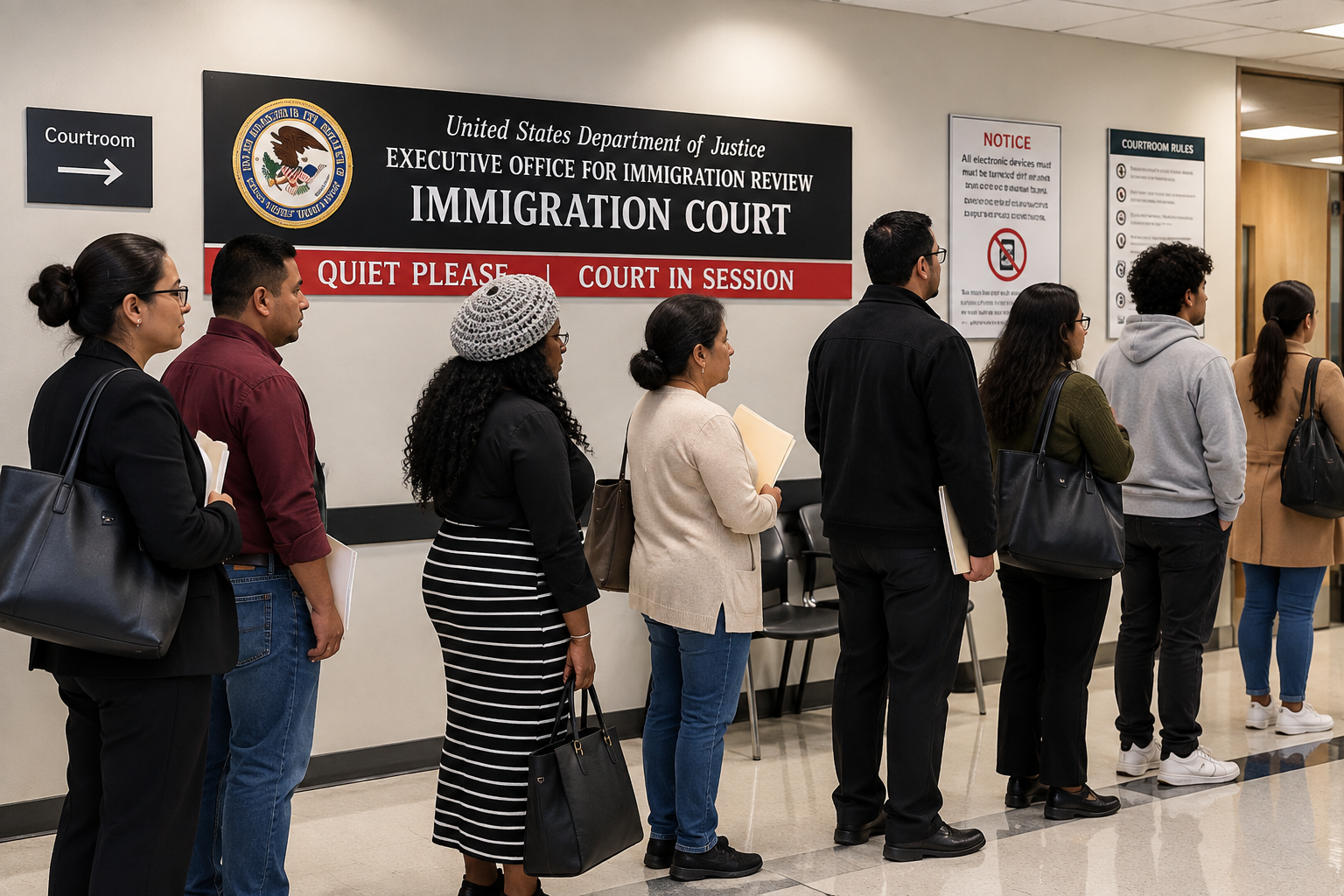
I-601 Waiver | Application for Grounds of Inadmissibility
Need an I-601 Waiver? Learn what the I-601 Waiver is, who may qualify, eligibility requirements, extreme hardship, processing times, supporting evidence, and what happens if USCIS approves or denies your application.
Recent reviews from our clients on Google
Read all 884 reviews on Google“I am very satisfied with the staff who answer each of my calls and give me the confidence to move forward with my case. I know I’ve only just started and the wait is long, but I have the full support of attorney Elizabeth Rosario and her team, and that gives me a lot of confidence! Thank you, attorney Elizabeth.”
Ana
September 2026
“First, thanks to God and to lawyer Elizabeth. Today everything went very well with the biometrics. I am very grateful. When another place told me no, she said here we can, and here are the results. Greetings, and may she continue fighting for our people.”
Israel G.
September 2026
“First of all, I would like to thank Attorney Elizabeth’s entire team for their daily work and kindness. My husband and I are extremely happy with the service and how they handle their work. I highly recommend them to anyone. Don’t hesitate to contact Attorney Elizabeth if you are looking for an immigration lawyer. I recommend her 100%. Best regards and blessings.”
Sarahi S.
September 2026
Reviews are written by clients and published on Google. Each describes that person’s own experience; past results do not guarantee a similar outcome in your case.

I-601, Application for Waiver of Grounds of Inadmissibility
The I-601 Waiver, officially known as the Application for Waiver of Grounds of Inadmissibility, is an application submitted to U.S. Citizenship and Immigration Services (USCIS) by certain individuals who are inadmissible to the United States and are seeking a waiver of a qualifying ground of inadmissibility.
Depending on the circumstances, Form I-601 may be used in connection with certain immigrant visa applications, adjustment of status applications, K or V nonimmigrant visa applications, Temporary Protected Status (TPS), and other qualifying immigration matters. This information is provided for educational purposes only and should not be considered legal advice.
What Is the I-601 Waiver?
The I-601 Waiver, formally called the Application for Waiver of Grounds of Inadmissibility, allows certain applicants to request a waiver of specific grounds of inadmissibility that would otherwise prevent them from obtaining an immigration benefit or being admitted to the United States.
USCIS explains that the requirements for Form I-601 vary depending on the applicant's circumstances, the immigration benefit being sought, and the specific ground of inadmissibility involved.
Depending on the circumstances, Form I-601 may be used to request a waiver for certain:
Health-related grounds,
Criminal grounds,
Fraud or misrepresentation grounds,
Certain immigration-related violations and,
The 3-year or 10-year unlawful-presence bars, among other grounds for which a waiver is authorized by law.
Not every ground of inadmissibility can be waived through Form I-601, and different grounds have different eligibility requirements.
A Licensed Immigration Attorney can evaluate the specific facts and evidence of a case before recommending an immigration strategy.
Who qualifies for the 601 waiver?
The USCIS Form I-601 Waiver requirements depend on the specific ground of inadmissibility involved and the type of immigration benefit the applicant is seeking. Not every person who is found inadmissible is eligible to file an Application for Waiver of Grounds of Inadmissibility, and eligibility varies under U.S. immigration law.
To file Form I-601, the applicant must:
Have been found inadmissible under one or more specific grounds listed in the Immigration and Nationality Act (INA)
Be applying for an immigrant visa, adjustment of status, or certain nonimmigrant visas
Have a qualifying relative who is a U.S. citizen or lawful permanent resident.
Demonstrate that the denial of the waiver would cause extreme hardship to the qualifying relative.
What Is Extreme Hardship?
One of the most important USCIS Form I-601 Waiver requirements is proving extreme hardship, when required by the applicable ground of inadmissibility.
Under U.S. immigration law, extreme hardship means more than the ordinary emotional or financial difficulties that many family members experience when separated. Be advised by a Licensed Immigration Attorney for your particular case.
When reviewing waiver applications, U.S. Citizenship and Immigration Services (USCIS) evaluates the totality of the evidence and may consider factors such as:
Ties to the United States versus ties to the foreign country.
The conditions in the country where the applicant would have to live.
Financial impact on the qualifying relative.
Length of the relationship and depth of family ties.

Frequently Asked Questions
What Happens If the 601 Waiver Is Denied?
If Form I-601 is denied, the applicant generally remains inadmissible to the United States for the specific ground that required the waiver of inadmissibility. As a result, the immigration application connected to the waiver may not move forward unless another legal option is available.
How Long Does It Take for a 601 Waiver to be Approved?
USCIS current processing times change frequently and vary depending on the service center handling your case. As of recent reporting, I-601 processing times have ranged from: Several months to over a year, in many cases. Be advised by a Licensed Immigration Attorney for your particular case.
What Affects Processing Time?
Where your case is filed.
Whether your case was filed at a consulate or with USCIS directly.
Complexity of the case and review.
Background and security checks.
Is an I-601 Waiver hard to get?
Approval rate is not something to take for granted. Why It Is challenging? USCIS does not approve any waiver petition. Applicants need to show circumstances that go beyond what any typical family would experience.
Evidence requirements are also demanding, the strength of waiver applications depends almost entirely on your documentation. In addition, USCIS Officer discretion plays a role, and if the ground of inadmissibility involves criminal history, the outcome becomes more complex.
If you would like to better understand the complete Adjustment of Status process, including Form I-485, eligibility requirements, supporting evidence, and marriage-based Green Card applications, you may also read our Adjustment of Status Form I-485 in 2026: Marriage Green Card Guide.
How to File Legal Requirements of the I-601 Waiver
Because every case is different, the application process depends on the specific ground of inadmissibility, the immigration benefit being requested, and the evidence available to support the waiver application. The following step-by-step process, is a general overview of the I-601 application process.
Determine eligibility
Before filing Form I-601, confirm that the specific ground of inadmissibility is eligible for a waiver under the Immigration and Nationality Act (INA). Not every ground of inadmissibility qualifies for a waiver of inadmissibility, so determining eligibility is an important first step.
Form I-601
Carefully complete the Application for Waiver of Grounds of Inadmissibility. Review all information for accuracy and consistency before submitting the application, as incomplete or inaccurate responses may delay USCIS processing.
Gather supporting documents
Depending on the circumstances of the case, supporting documents may include:
Proof of the qualifying relationship.
Evidence of the qualifying relative's U.S. citizenship or permanent resident status.
Letters from community members.
Before submitting the application, verify the current I-601 Waiver form filing fee, and any documentation required by USCIS. After submission, USCIS will review the application and determine whether additional information is needed before making a final decision.
What Is the Difference Between Form I-601 and Form I-601A?
Although both forms involve immigration waivers, Form I-601 and Form I-601A are not interchangeable:
Form I-601A is used by certain eligible immigrant visa applicants to request a provisional waiver of unlawful presence before departing the United States for consular processing.
Form I-601 may be used to request waivers of certain grounds of inadmissibility when authorized by U.S. immigration law.
The appropriate waiver depends on the applicant’s ground of inadmissibility, immigration history, and the immigration benefit being sought. Be advised by a Licensed Immigration Attorney for your particular case.
For more information about Form I-601A, including eligibility, extreme hardship, processing times, and what happens after approval, read our I-601A Waiver: Requirements, Eligibility & Process (2026 Guide).
What are Common Reasons for 601 Waiver Denials?
An I-601 Waiver may be denied when USCIS determines that the applicant has not established eligibility for the waiver under the applicable immigration law.
Common reasons may include:
The applicant does not meet the eligibility requirements for the specific ground of inadmissibility.
The required qualifying relative or other statutory requirement has not been established, when applicable.
The applicant has not provided sufficient evidence to establish extreme hardship, when extreme hardship is required.
The supporting evidence is incomplete.
A denial of an I-601 Waiver denial does not necessarily mean that every immigration option is permanently unavailable. Speak with a licensed immigration attorney before preparing or submitting any application.
Speak With a Licensed Immigration Attorney
I-601 Waivers cases often involve complex immigration law issues, detailed evidence requirements, and extensive USCIS review. At Elizabeth Rosario Law, our Licensed Immigration Attorneys help future applicants understand their legal options, prepare supporting documentation, and navigate the application process; we are ready to listen.
📞 [Schedule Your FREE Evaluation Today]
Call Our National Consult Line: (855) 627-2292
We proudly serve clients across all 50 states from our primary offices in Wyoming, Michigan, and Charlotte, North Carolina.
Disclaimer: This content is for general informational purposes only and does not constitute legal advice. Immigration laws change frequently and the information here may not reflect the most current legal developments. Consult an attorney for advice on your specific situation.

Elizabeth Rosario
Immigration Attorney with 14+ years of experience helping families navigate complex immigration matters.