U Visa Benefits in 2026: Work Permit & Wait Times
Discover U Visa benefits in 2026, including Bona Fide Determination, U Visa work permits, processing times, deportation protection, and Green Card eligibility.
The U Visa may help immigrants receive a work permit, legal protection, and a path to permanent residency while cooperating with law enforcement after qualifying crimes.
U Visa Benefits in 2026: Work Permit & Wait Times
What Benefits Does a U Visa Provide?
A U Visa gives temporary legal status and protection to victims of qualifying crimes who help law enforcement investigate or prosecute criminal activity.
A U Visa may help eligible immigrants
obtain a U Visa work permit (EAD),
legally work in the United States,
receive deferred action protection,
apply for a Social Security number,
obtain a driver’s license in many states,
include qualifying family members,
and eventually apply for lawful permanent residence.
Many applicants receive important immigration benefits before final approval through Bona Fide U Visa status.
Does a U Visa Provide a Work Permit?
Yes. Many U Visa applicants may receive a work permit through Bona Fide Determination (BFD) approval while waiting for final U Visa adjudication.
U Visa Work Permit and EAD Benefits
A U Visa work permit is officially called an Employment Authorization Document (EAD). Once USCIS grants Bona Fide U Visa status, applicants may receive:
work authorization,
deferred action,
and protection from deportation.
A U Visa EAD may allow immigrants to:
legally work in the United States,
apply for better employment opportunities,
obtain a Social Security number,
and qualify for state identification documents.
For many immigrants, receiving a work permit is one of the most important parts of the U Visa process.
Can You Work While Waiting for a U Visa?
Many immigrants may legally work while waiting for a U Visa after receiving Bona Fide Determination approval and a valid Employment Authorization Document (EAD).
Working While Waiting for U Visa Approval
Current U Visa wait times are extremely long because federal law limits the number of U Visas issued each year. However, many applicants no longer need to wait for final approval to receive immigration benefits.
After receiving Bona Fide U Visa status, eligible applicants may:
legally work,
renew employment authorization,
obtain a Social Security number,
and remain in the United States while waiting for final adjudication.
This process has become one of the most important forms of humanitarian immigration protection available in 2026.
What Is Bona Fide U Visa Status?
Bona Fide U Visa status is a preliminary USCIS determination confirming that a U Visa application appears legitimate, complete, and eligible for deferred action and work authorization.
Understanding Bona Fide U Visa Benefits
The Bona Fide Determination process was created to provide earlier protection for immigrants waiting in the U Visa backlog. When USCIS determines a case is bona fide, applicants may receive:
deferred action,
a U Visa work permit,
protection from deportation,
and continued placement on the U Visa waitlist.
USCIS generally reviews whether:
the application is properly filed,
background checks are completed,
supporting evidence is sufficient,
and the applicant does not present security concerns.
For many applicants, Bona Fide approval becomes the first major milestone in the immigration process.
How Long Does the U Visa Take in 2026?
Current U Visa processing times may range from several years to more than a decade due to federal visa caps and large USCIS backlogs.
Current U Visa Wait Times
The U Visa waitlist continues to grow because federal law only allows 10,000 principal U Visas per year. As a result, many applicants face long processing times before final approval. In 2026, applicants may wait:
several years for Bona Fide review,
and significantly longer for final U Visa approval.
Processing times may vary depending on:
USCIS workload,
case complexity,
background checks,
and supporting evidence.
Because of these long wait times, many immigrants focus first on obtaining Bona Fide U Visa status and work authorization.
Why Are U Visa Wait Times So Long?
U Visa wait times are long because Congress limits approvals to 10,000 principal visas per year while hundreds of thousands of applicants remain on the waitlist.
Understanding the U Visa Waitlist
The U Visa backlog has increased significantly over the past decade. Large processing delays are often caused by:
annual visa caps,
rising application numbers,
security screenings,
and limited USCIS resources.
Although wait times remain long, Bona Fide processing has helped many applicants receive earlier immigration protection and work permits while waiting.
What Happens After Bona Fide Approval?
After Bona Fide approval, many applicants may receive work authorization, deportation protection, a Social Security number, and eligibility for state identification benefits.
Benefits After Bona Fide U Visa Approval
Once USCIS grants Bona Fide status, applicants may receive:
an Employment Authorization Document (EAD),
deferred action protection,
a Social Security number,
and eligibility for driver’s licenses in many states.
Deferred action helps protect immigrants from removal proceedings while USCIS continues processing the U Visa petition. For many families, Bona Fide approval creates greater financial stability and long-term security.
Can a U Visa Lead to a Green Card?
U Visa holders may eventually apply for lawful permanent residence after meeting certain physical presence and eligibility requirements.
U Visa Green Card Eligibility
Many immigrants ask whether a U Visa can lead to permanent residency. In many cases, the answer is yes. After holding U Visa status for approximately three years, eligible applicants may apply for a Green Card if they:
maintain continuous presence,
continue complying with immigration requirements,
and demonstrate ongoing admissibility.
Applicants may also need to show that:
humanitarian factors support adjustment,
family unity supports adjustment,
or the application serves the public interest.
Can Family Members Receive Benefits Too?
Yes. Certain family members may receive derivative immigration benefits through a principal U Visa applicant.
U Visa Derivative Benefits
Depending on the applicant’s age, qualifying family members may include:
spouses,
children,
parents,
and unmarried siblings under 18.
Derivative family members may also qualify for:
work authorization,
deferred action,
and future lawful permanent residence.
These protections help keep immigrant families together during long U Visa wait times.
Psychological Evaluations and Stronger U Visa Cases
A psychological evaluation may help strengthen a U Visa case by documenting substantial physical or mental harm caused by the qualifying crime.
Psychological Evaluation U Visa Evidence
USCIS requires evidence showing that victims suffered substantial harm.
In many cases, psychological evaluations help document:
anxiety,
depression,
PTSD,
emotional trauma,
and long-term psychological effects.
Helpful supporting evidence may include:
therapist reports,
medical records,
personal declarations,
and counseling documentation.
Strong evidence of substantial physical or mental abuse may improve overall case presentation.
What Happens If a U Visa Is Denied?
A U Visa denial does not always end immigration options. Some applicants may qualify to refile, appeal, or pursue other forms of immigration relief.
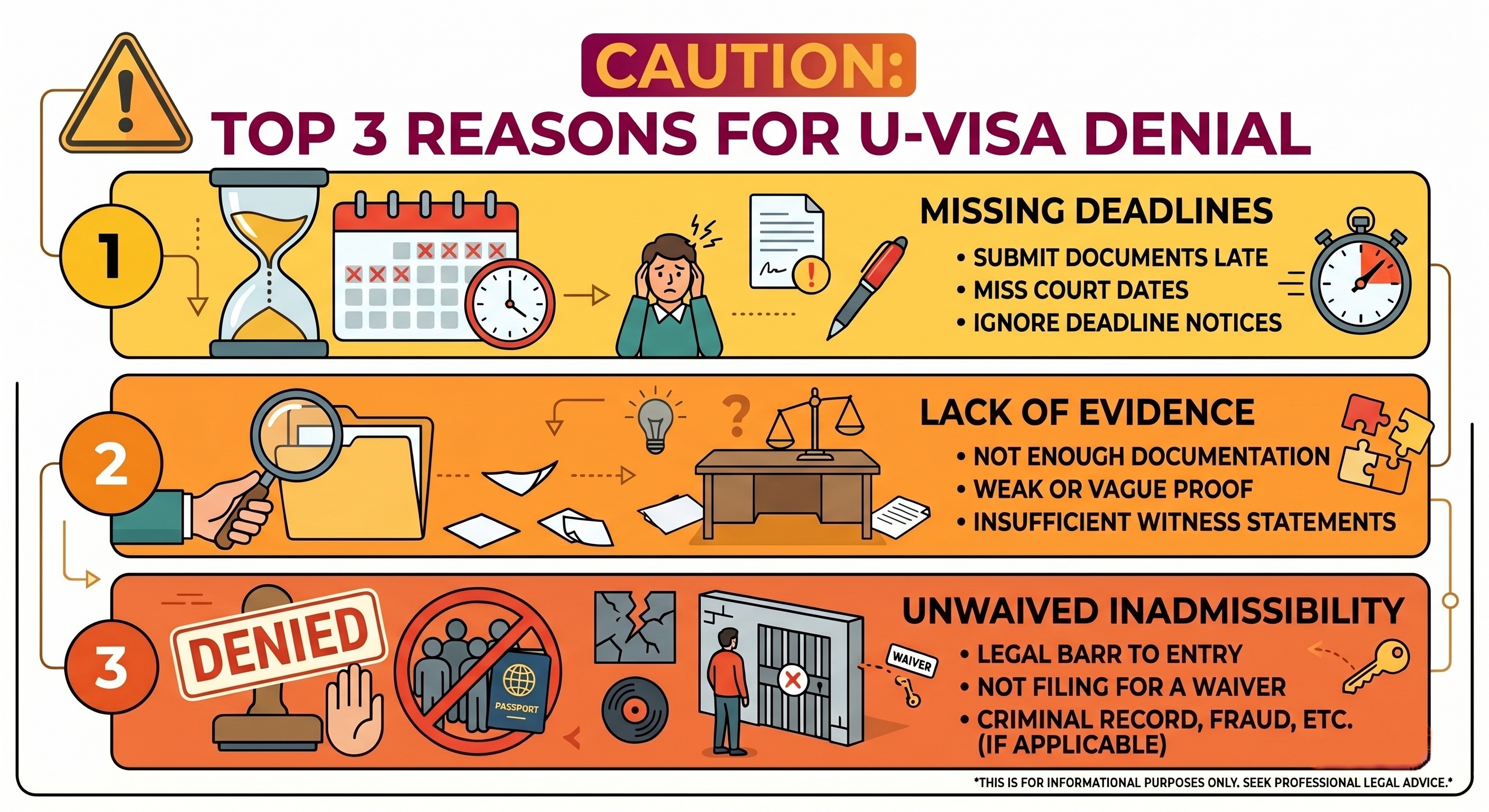
Common Reasons for U Visa Denial
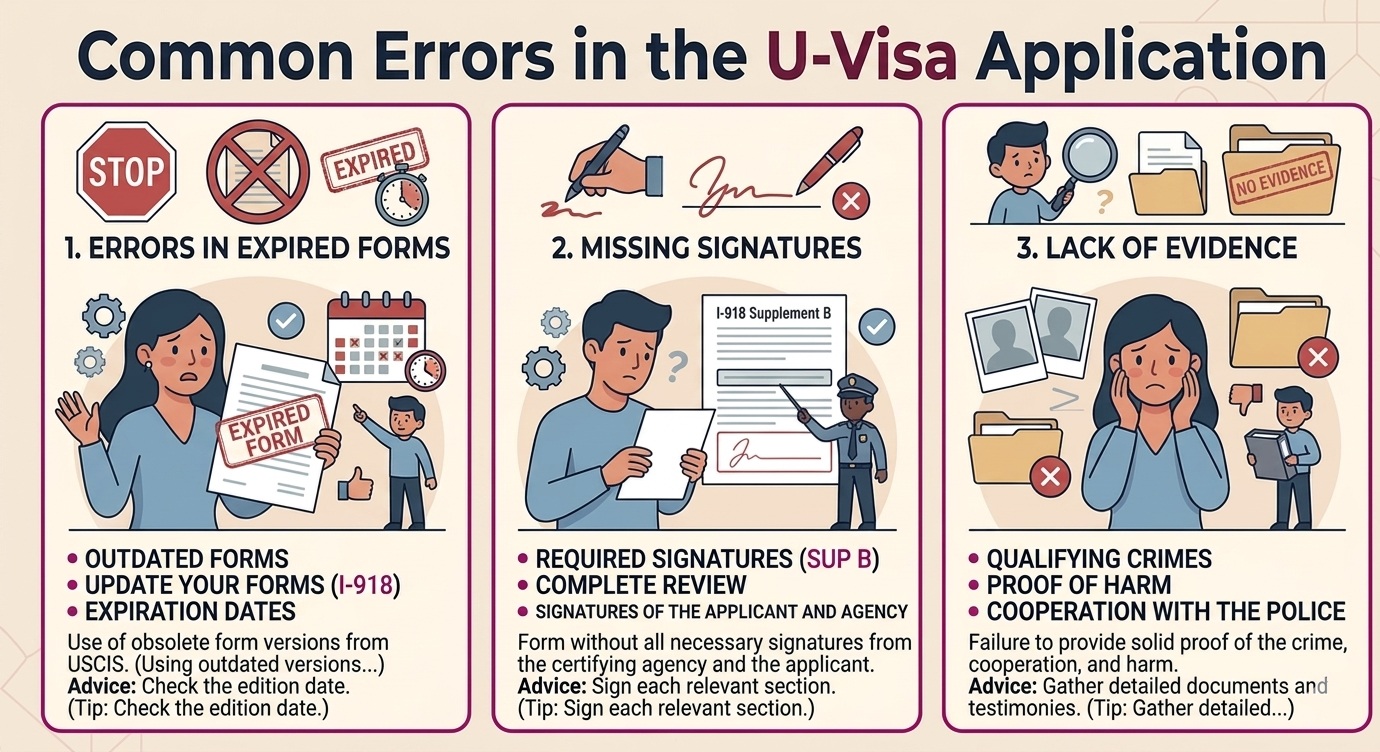
Common reasons for denial may include:
missing certifications,
weak evidence,
inadmissibility issues,
incomplete applications,
or failure to respond to USCIS requests.
In some cases, applicants may still qualify for:
Because immigration consequences may be serious, applicants should review denial notices carefully with a licensed immigration attorney.
Speak With a Licensed Immigration Attorney
U Visa cases involve complex immigration laws, strict USCIS requirements, long processing times, certifications, and detailed supporting evidence.
Your (future) experienced immigration lawyer may help evaluate:
work permit eligibility,
Bona Fide U Visa status,
qualifying family members,
waivers,
and long-term Green Card options.
Let’s Turn Your Fear Into a Future
Elizabeth Rosario Law represents immigrant families across the United States in humanitarian immigration matters, including U Visa, VAWA petitions, and related immigration relief. Every case at Elizabeth Rosario Law starts with a private, free case evaluation. We will look at your visa case, and help you understand exactly which possibilities are open to you. Ready to take the first step? Don't let another day go by feeling unprotected.
[Schedule Your FREE Evaluation Today]
Our immigration lawyers have helped families nationwide navigate the immigration system. We are proud of our 14+ years of dedicated immigration advocacy.
Call (855) 627-2292 | Serving clients in all 50 states with offices in Wyoming, Michigan; and Charlotte, North Carolina.
Disclaimer: Este contenido es solo para fines informativos generales y no constituye asesoramiento legal. Las leyes de inmigración cambian frecuentemente y la información aquí puede no reflejar los desarrollos legales más recientes. Consulte a un abogado para obtener asesoramiento sobre su situación específica.
Elizabeth Rosario
Immigration Attorney with 14+ years of experience helping families navigate complex immigration matters.
Boletín Informativo
Suscríbase a nuestro boletín para recibir actualizaciones importantes sobre leyes migratorias y recursos para su caso.
Respetamos su privacidad. Puede cancelar su suscripción en cualquier momento.