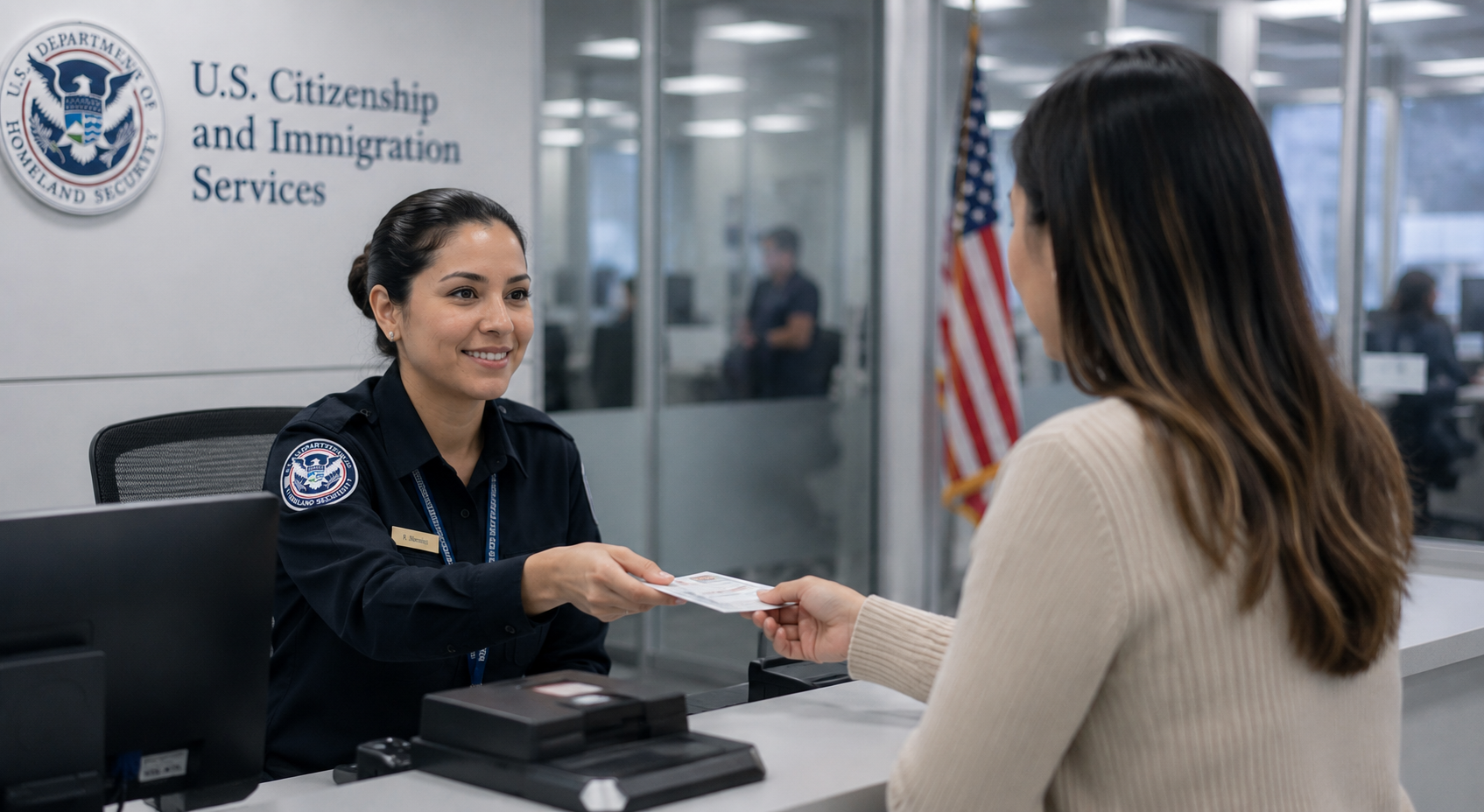
Tiempos de Procesamiento USCIS
Conozca por qué ocurren los retrasos de la Green Card processing time en 2026, qué afecta los tiempos de procesamiento del Form I-485, USCIS backlog 2026, green card delays 2026, las exenciones de inmigración, la residencia condicional y cómo los residentes permanentes legales pueden proteger su estatus migratorio.
Reseñas recientes de nuestros clientes en Google
Lea las 676 reseñas en Google“First of all, I want to thank God for allowing me to come to the law firm of Attorney Elizabeth Rosario and her excellent team. Since she took my case, they have supported me with great professionalism, answered my questions, returned my calls—in short, I haven’t felt alone during this process. They have kept me informed of my progress, so thank you very much, Attorney Elizabeth, and thank you to your entire team. May God bless you abundantly! 100% recommended.”
Karen L.
agosto de 2026
“Over the years, I’ve hired several different lawyers for my immigration case, but none compare to the team at Elizabeth Rosario Law. They are highly experienced and know how to structure any case effectively. They have undoubtedly exceeded my expectations. I am grateful to God for guiding me to work with them. Highly recommended.”
Elisa L.
julio de 2026
“Excellent team, highly recommended! Always kind and approachable, very professional, and above all, they truly make you feel guided by knowledgeable and highly professional people! From the beginning of my process with them, I have always found a satisfactory response. Many thanks, and God bless this great team of people who work with Attorney Elizabeth Rosario.”
Carlos B.
mayo de 2026
Las reseñas las escriben los clientes y se publican en Google. Cada una describe la experiencia de esa persona; los resultados anteriores no garantizan un resultado similar en su caso.
Muchas familias que solicitan la residencia permanente legal experimentan retrasos inesperados durante el proceso migratorio. Si bien algunas solicitudes de Green Card avanzan sin problemas significativos, otras pueden tardar más debido a los tiempos de espera USCIS, el retraso acumulado actual (USCIS backlog, green card delays 2026), la programación de entrevistas, las verificaciones de antecedentes o las solicitudes de documentación adicional.
Tiempos de Procesamiento USCIS (Guía 2026)
Ya sea que esté considerando presentar una solicitud por primera vez o ayudando a un familiar a conocer sus opciones migratorias, es importante recibir orientación basada en las circunstancias particulares de cada caso. Consulte con un Abogado de Inmigración autorizado para su situación específica.
En esta guía, aprenderá las razones más comunes por las cuales se retrasan las solicitudes de Green Card, qué puede afectar los tiempos de espera Formulario I-485, cómo las exenciones de inmigración como el immigration waiver i-601 (Formulario I-601A) pueden ayudar a ciertos solicitantes, cuándo el Advance Parole puede ser necesario y qué deben saber los residentes permanentes legales para proteger su estatus migratorio. También encontrará información general sobre el ajuste de estatus, la evidencia de respaldo, las peticiones basadas en la familia y los problemas comunes revisados por USCIS durante el proceso de solicitud.
¿Por qué se retrasan los casos de Green Card en 2026?
Aunque cada caso sigue un cronograma diferente en el servicios de ciudadanía e inmigración, varios factores comunes pueden aumentar el tiempo de espera de una Green Card y contribuir al retraso general de la agencia de inmigración:
Retrasos en USCIS y mayores tiempos de espera de la agencia.
Solicitudes de Evidencia (RFEs).
Verificaciones de antecedentes.
Revisiones de seguridad extendidas.
Tarifas de presentación incorrectas, presentar el formulario i-130 incompletos.
Categorías de espera del Boletín de Visas para ciertos casos basados en la familia y el empleo.
Incluso un pequeño error de presentación puede retrasar el proceso migratorio por varios meses.
Revisar cuidadosamente su solicitud, presentar evidencia de respaldo completa y comprender los requisitos de elegibilidad antes de solicitar la residencia permanente o ajuste de estatus puede ayudar a reducir retrasos innecesarios. Consulte con un abogado de inmigración licenciado.
Preguntas Frecuentes
¿Por qué mi Green Card está tardando tanto?
Muchos solicitantes se preguntan: "¿Cuánto tiempo toma la green card application?". La respuesta depende de varios factores, incluido el USCIS Backlog 2026 (tiempos de espera locales del USCIS), el tipo de solicitud presentada y si USCIS solicita evidencias adicionales (RFEs)
Los retrasos también pueden ser resultado de verificaciones de antecedentes, o programación de entrevistas. Cada caso sigue un cronograma de USCIS diferente, por lo que los tiempos de procesamiento pueden variar significativamente.
¿Puedo viajar mientras el Formulario I-485 está pendiente?
En muchas situaciones, los solicitantes deben recibir un permiso de viaje (Advance Parole) antes de salir de los Estados Unidos mientras el Formulario I-485 está pendiente. Viajar sin la autorización de viaje requerida puede afectar su solicitud para ajuste de estatus y, en algunos casos, su capacidad para continuar el proceso migratorio. La elegibilidad depende de los hechos de cada caso.
¿Cuánto tiempo es el tiempo de procesamiento del I-485 después de la entrevista?
El tiempos de procesamiento USCIS después de una entrevista varía según la oficina local del USCIS, las verificaciones de antecedentes y si un oficial necesita una revisión adicional antes de tomar una decisión. Algunos solicitantes reciben la aprobación en pocas semanas, mientras que otros pueden esperar varios meses antes de que USCIS apruebe la solicitud.
¿Puede un titular de Visa K-1 solicitar el Ajuste de Estatus?
Sí. Muchas personas que ingresaron a los Estados Unidos con una visa de prometido(a) pueden solicitar posteriormente el ajuste de estatus mediante la presentación del Formulario I-485 después de casarse con el peticionario ciudadano estadounidense. Los solicitantes deben seguir cumpliendo con todos los requisitos de elegibilidad y presentar la evidencia de respaldo requerida durante todo el proceso.
¿Qué es una Determinación de Buena Fe (BFD)?
Una Bona Fide Determination (BFD) es una revisión inicial utilizada en ciertos casos de inmigración humanitaria, particularmente en peticiones de Visa U. Aunque una BFD generalmente no se aplica a las solicitudes de Green Card por matrimonio, los solicitantes elegibles pueden recibir protecciones temporales y autorización de trabajo mientras USCIS continúa revisando su petición.
¿Puedo obtener una Green Card si mi cónyuge abusó de mí?
La ley de inmigración EE.UU. proporciona protecciones para ciertos sobrevivientes de abuso a través de una autopetición VAWA. Dependiendo de las circunstancias, los solicitantes elegibles pueden continuar solicitando una Green Card sin depender de un cónyuge abusivo.
Cada caso es revisado individualmente por USCIS en función de la evidencia disponible y los requisitos de elegibilidad aplicables. Dependiendo de las circunstancias del solicitante, una autopetición VAWA puede permitir a las personas elegibles:
Presentar el Formulario I-360 de manera independiente.
Continuar solicitando una Green Card sin salir de USA cuando sean elegibles.
Solicitar un permiso de trabajo EAD.
Mantener los registros migratorios confidenciales.
USCIS revisa cada caso de manera individual basándose en la evidencia de respaldo presentada. Si su caso de inmigración involucra a un cónyuge o familiar abusivo, también podría encontrar útil nuestra guía sobre qué es VAWA y la elegibilidad para autopeticiones en 2026. Consulte con un Abogado de Inmigración autorizado para su situación específica.
Retraso del USCIS en 2026 y tiempos de procesamiento de la Green Card
Las peticiones basadas en la familia, las solicitudes basadas en el empleo, las peticiones humanitarias y los casos de ajuste de estatus uscis son procesados por el servicio de ciudadanía e inmigración (USCIS), lo que contribuye a mayores tiempos de espera y a un retraso continuo.
Como resultado, muchos solicitantes experimentan un tiempos de espera USCIS más prolongado antes de recibir una entrevista (interview lawful permanent resident), una Solicitud de Evidencia (REFs)o una decisión final para obtener la residencia permanente.
Las causas comunes de los retrasos a nivel general incluyen:
Tiempos de programación de entrevistas más prolongados.
Verificaciones de antecedentes
Mayor volumen de solicitudes.
Procedimientos adicionales de prevención de fraude y verificación de identidad.
Los casos de cambio de estatus por matrimonio pueden avanzar más rápido que el procesamiento consular en algunas situaciones, pero cada cronograma depende de la oficina local o centro de servicio que maneje la solicitud.
Retrasos comunes durante el proceso de Ajuste de Estatus
Incluso cuando USCIS procesa los casos con normalidad, los errores en una solicitud pueden aumentar significativamente el formulario i-485 español. Algunos de los problemas más comunes incluyen:
Tarifas de presentación incorrectas.
Solicitudes de Evidencia (RFEs).
Direcciones postales incorrectas.
Actas de matrimonio faltantes.
Formulario i-130 petición.
Solicitudes de Evidencia (RFEs)
Una de las razones más comunes para los retrasos de la Green Card es recibir una Solicitud de Evidencia (RFE). El servicios de ciudadanía e inmigración (USCIS) emite una RFE cuando un oficial necesita documentación adicional antes de tomar una decisión.
Recibir una RFE no significa que la solicitud será denegada. Sin embargo, responder a una RFE puede aumentar el Green Card processing time general. El USCIS comúnmente solicita:
Prueba de entrada legal.
Evidencia de matrimonio de buena fe (bona fide).
Documentos de identidad.
Registros del historial migratorio.
¿Puedo solicitar una Exención de Inmigración?
Algunos solicitantes se preocupan por no poder continuar solicitando una Green Card porque ingresaron a los Estados Unidos sin inspección o acumularon presencia ilegal. Dependiendo de los hechos del caso, algunas personas pueden calificar para un immigration waiver i-601 (Formulario I-601A) antes de salir del país para el procesamiento consular.
Exención I-601 y Formulario I-601A
El Formulario I-601A, también conocido como la Exención Provisional por Presencia Ilegal, permite a ciertos solicitantes elegibles solicitar el perdón por presencia ilegal antes de salir de los Estados Unidos para asistir a una entrevista de visa de inmigrante en su país de origen.
Cuando se aprueba, la exención puede reducir la separación familiar y hacer que el proceso migratorio sea más predecible. Sin embargo, USCIS revisa cada solicitud individualmente y la aprobación depende de cumplir con todos los requisitos de elegibilidad.
Comprensión de los castigos de 3 y 10 años
La ley federal de inmigración puede imponer un castigo de 3 o 10 años a las personas que abandonan los Estados Unidos después de haber acumulado presencia ilegal. En algunos casos, también pueden aplicarse causales adicionales de inadmisibilidad, lo que hace que la orientación legal sea especialmente importante antes de viajar fuera del país.
Evidencia de respaldo para una exención
La mayoría de las solicitudes de immigration waiver i-601 requieren evidencia de respaldo que demuestre que un familiar calificado (ciudadano estadounidense o residente permanente legal) sufriría dificultades extremas si la exención fuera denegada. Los documentos comunes pueden incluir evaluaciones de salud mental, registros financieros y evidencia de responsabilidades familiares.

¿Por qué mi Green Card solo dura 2 años?
Una Green Card de 2 años generalmente significa que USCIS otorgó la residencia permanente condicional, a menudo porque el matrimonio tenía menos de dos años de antigüedad cuando el solicitante se convirtió en residente permanente legal.
USCIS puede programar una entrevista para un interview lawful permanent resident al revisar el Formulario I-751 si los oficiales necesitan información adicional sobre el matrimonio o evidencia de respaldo. Algunos casos se aprueban sin entrevista, mientras que otros requieren que los solicitantes se presenten ante un oficial.
Los residentes condicionales generalmente tienen los mismos derechos que otros residentes permanentes, incluida la capacidad de vivir y trabajar en los Estados Unidos, viajar internacionalmente y continuar acumulando elegibilidad para la ciudadanía estadounidense. Sin embargo, deben eliminar las condiciones de su residencia antes de que la tarjeta expire.
Eliminación de condiciones: Formulario I-751
La mayoría de los residentes condicionales deben presentar el Formulario I-751 durante los 90 días anteriores a que expire su Green Card. USCIS revisa la evidencia de respaldo que demuestra que el matrimonio se celebró de buena fe, tales como:
Declaraciones de impuestos conjuntas.
Cuentas financieras compartidas.
Documentos de contrato de arrendamiento o hipoteca.
Pólizas de seguro.
Evidencia actualizada de la relación.
Perder el plazo de presentación puede poner en riesgo el estatus de residente permanente legal. Si el matrimonio terminó debido a un divorcio, abuso o dificultad extrema, algunos solicitantes pueden calificar para una exención del I-751, siempre que cumplan con los requisitos de elegibilidad aplicables.
¿Puedo patrocinar a mis padres o hermanos?
Los ciudadanos estadounidenses pueden patrocinar a ciertos familiares para la residencia permanente, pero el proceso migratorio y los tiempos de espera dependen de la relación:
Padres: Los ciudadanos estadounidenses que tengan al menos 21 años generalmente pueden presentar el form i-130 para un padre o madre. Debido a que los padres son considerados familiares inmediatos, las visas suelen estar disponibles sin necesidad de esperar el Boletín de Visas.
Hermanos: Los ciudadanos estadounidenses también pueden presentar peticiones para hermanos a través de las categorías de preferencia familiar. A diferencia de las peticiones de padres, estos casos a menudo implican largos tiempos de espera para la Green Card, fechas de prioridad y límites de disponibilidad de visas publicados en el Boletín de Visas mensual.
Comprender la fecha de prioridad aplicable y la disponibilidad actual de visas es una parte importante de la planificación del proceso migratorio.
¿Puedo ser deportado si tengo una Green Card?
Convertirse en residente permanente legal no garantiza una protección absoluta contra la expulsión. Bajo la ley de inmigración de EE. UU., ciertas acciones pueden poner en riesgo su estatus migratorio.
Razones comunes por las cuales un residente permanente legal puede enfrentar la expulsión:
USCIS puede revisar casos que involucren:
Ciertas condenas penales, incluidos delitos graves agravados, delitos de drogas, violencia doméstica o delitos que involucren depravación moral.
Fraude migratorio, como información falsa o evidencia de respaldo fraudulenta presentada durante el proceso de solicitud de la Green Card.
Viajes prolongados fuera de los Estados Unidos que sugieran que la residencia permanente ha sido abandonada.
Al evaluar a un residente permanente legal que regresa al país, los oficiales de inmigración pueden considerar el tiempo pasado en el extranjero, el empleo fuera de los Estados Unidos y si el solicitante mantuvo suficientes vínculos con el país. Antes de realizar un viaje prolongado, algunos solicitantes pueden beneficiarse de obtener un permiso de reingreso (Advance Parole). Como cada caso es diferente, es importante comprender los requisitos de elegibilidad aplicables antes de tomar decisiones que puedan afectar su estatus de residente permanente.
Hable con un Abogado Licenciado de Inmigración
Si tiene preguntas sobre el Formulario I-485, el ajuste de estatus, los retrasos de la Green Card, el immigration waiver i-601, VAWA o su elegibilidad para la residencia permanente legal, es importante recibir orientación legal basada en sus circunstancias individuales.
En Elizabeth Rosario Law, nuestros abogados de inmigración con licencia ayudan a individuos y familias en todo Estados Unidos a preparar solicitudes de inmigración, organizar evidencia de respaldo, responder a las solicitudes del USCIS y navegar por cada etapa del proceso migratorio.
📞 Programe su evaluación GRATUITA hoy mismo
Llame a nuestra línea de consulta nacional: (855) 627-2292
Atendemos con orgullo a clientes en los 50 estados desde nuestras oficinas principales en Wyoming, Michigan y Charlotte, Carolina del Norte.
Aviso legal: Este contenido es solo para fines informativos generales y no constituye asesoramiento legal. Las leyes de inmigración cambian frecuentemente y la información aquí puede no reflejar los desarrollos legales más recientes. Consulte a un abogado para obtener asesoramiento sobre su situación específica.

Elizabeth Rosario
Abogada de inmigración con más de 14 años de experiencia ayudando a las familias a navegar asuntos migratorios complejos.